

OZ FUSION
← Return to Protocol LibraryPHOENIX PROTOCOL
PHOENIX PROTOCOL
Couldn't load pickup availability
COMPOUNDS INCLUDED
1 x 10mg vial
1 x 20mg vial
MOTS-C
BPC-157
TB-500
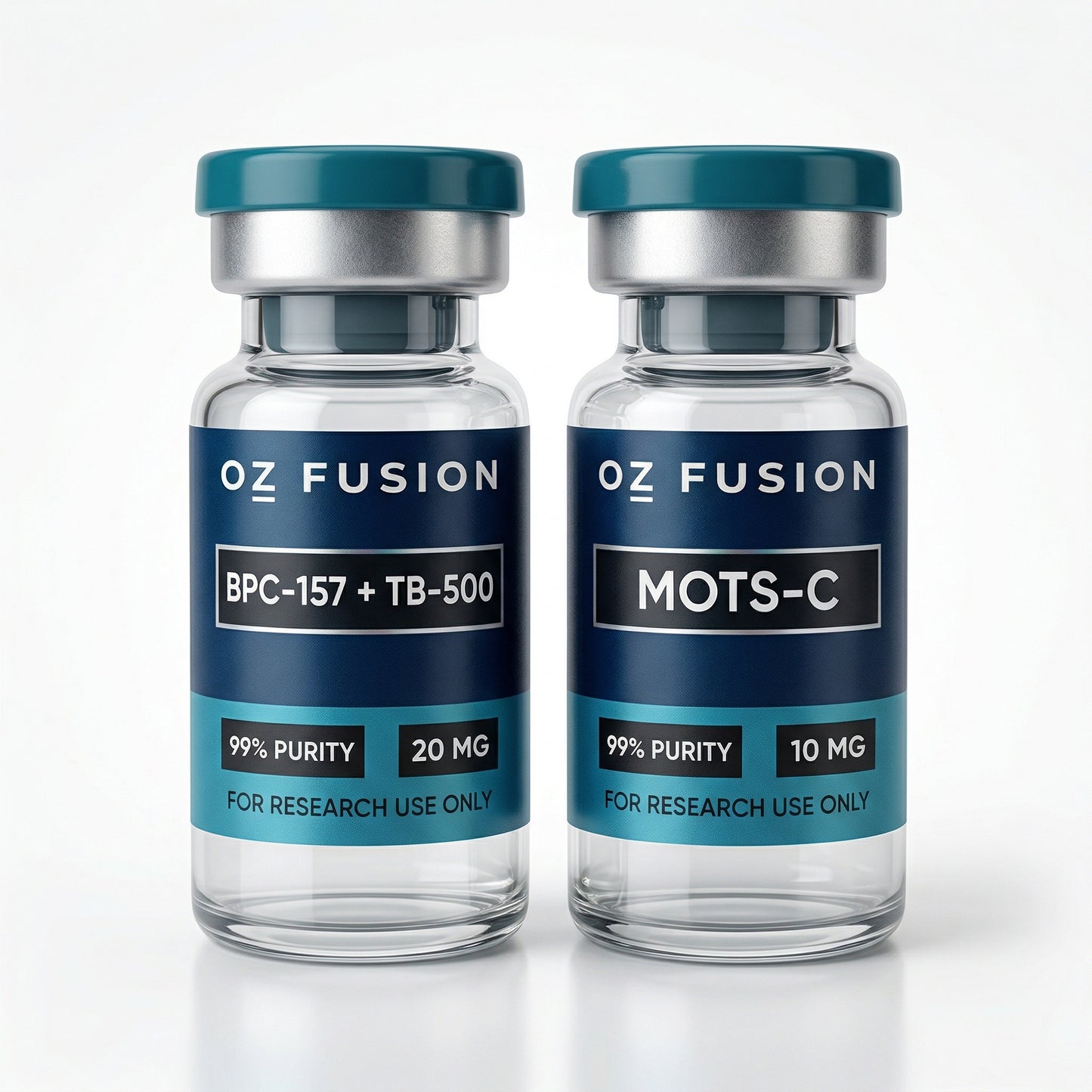
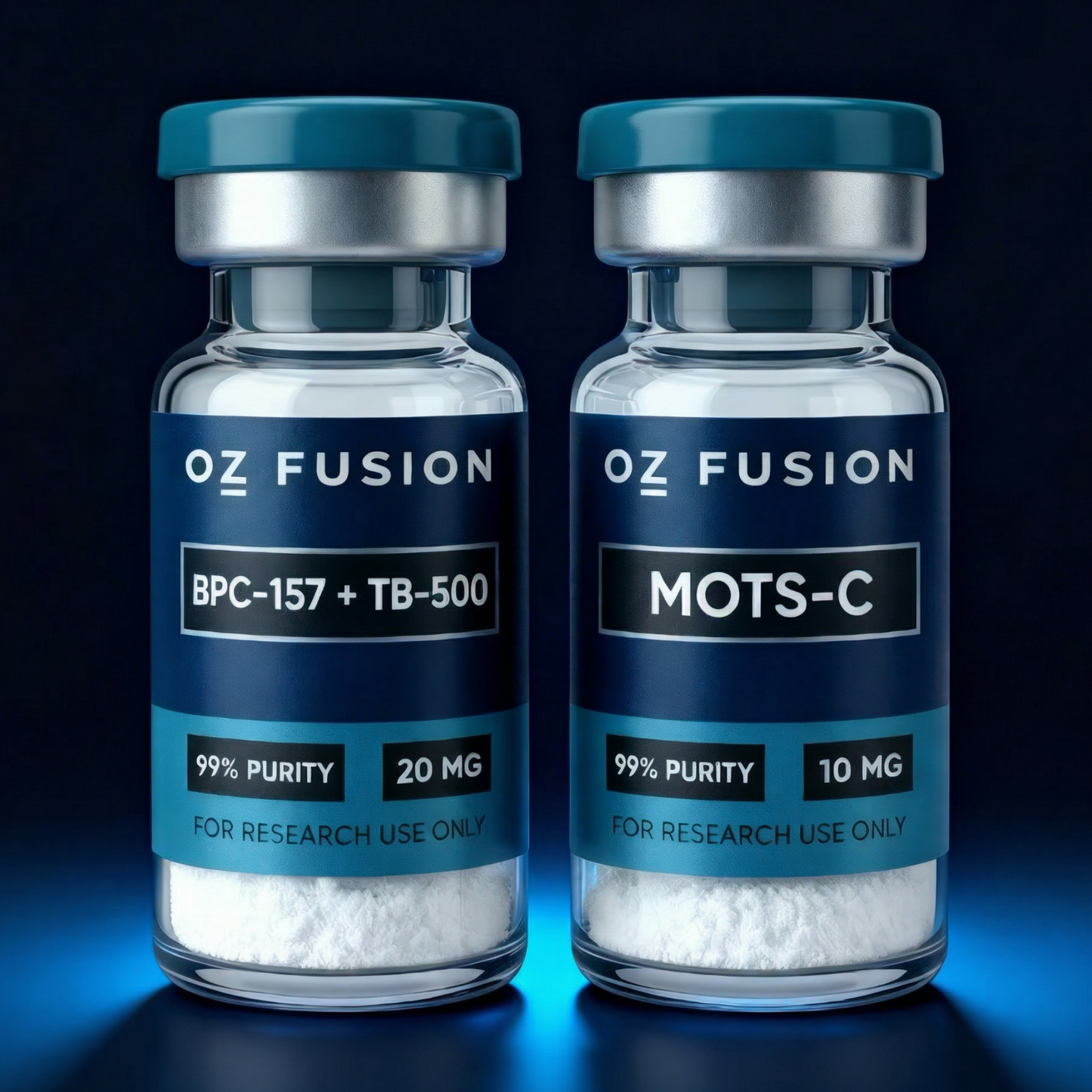
A structured breakdown of the compounds within the PHOENIX protocol, designed around tissue repair, structural recovery, and adaptive metabolic support.
BPC-157
BPC-157 is a synthetic pentadecapeptide studied for its association with tissue repair signalling, structural recovery processes, and restoration-focused research models. Within the PHOENIX protocol, it provides the core repair component that anchors the stack in resilience and recovery continuity.
TB-500
TB-500 is a synthetic peptide analogue referenced in research for its association with tissue repair dynamics, mobility support, and recovery framework optimisation. In this protocol, it expands the restoration profile by supporting broader movement and structural recovery pathways alongside BPC-157.
MOTS-C
MOTS-C is a mitochondrial-derived peptide studied for its association with metabolic regulation, adaptive energy signalling, and cellular efficiency models. Within the PHOENIX protocol, it adds the metabolic and adaptive layer that separates this stack from a purely repair-focused framework.
The PHOENIX protocol is structured as a three-part restoration system. BPC-157 supports targeted repair signalling, TB-500 broadens the recovery framework through tissue and mobility support, and MOTS-C contributes a metabolic layer tied to adaptive energy regulation. Together, they form a more complete regeneration-oriented stack built around repair continuity, resilience, and system-wide recovery support.